
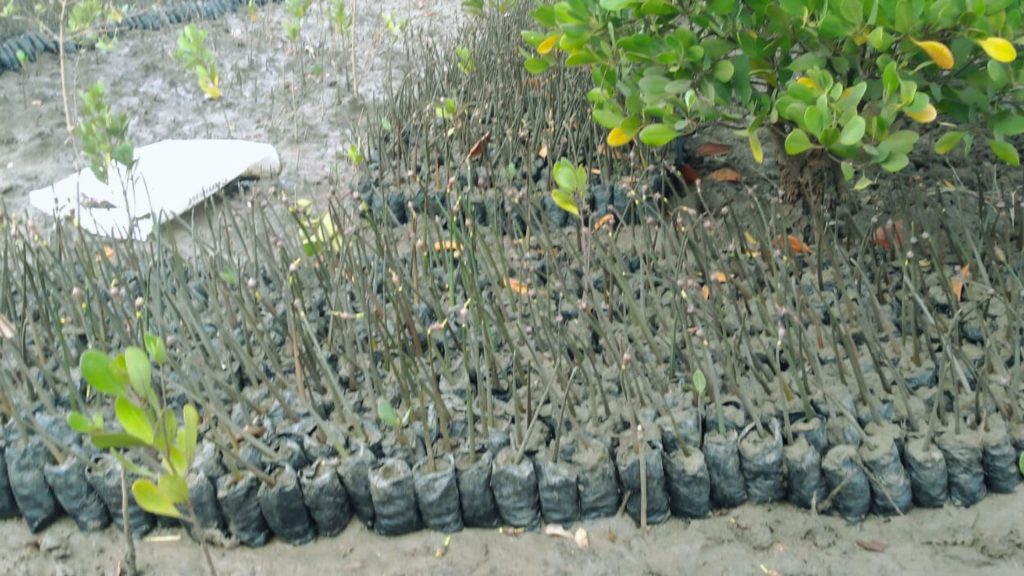
One Million Mangroves for Nature Climate and Communities in Kwale County
Implementation Status: Not Yet Started
Focus Areas: Mangrove Restoration, Biodiversity Conservation, Climate Action, Community Livelihoods, Marine Conservation and Coastal Resilience
Project Overview
The One Million Mangroves for Nature, Climate and Communities in Kwale County project will support the restoration and long-term recovery of degraded mangrove ecosystems along the Kenyan coast.
The project will aim to establish and protect one million mangroves through science-based restoration, community participation, biodiversity monitoring, climate action and improved coastal resource management.
Rather than focusing only on the number of trees planted, the project will measure restoration success through mangrove survival and growth, ecosystem recovery, biodiversity, carbon benefits, hydrological conditions and the participation and livelihoods of local communities.
The project will work with coastal communities and other relevant stakeholders to develop practical and sustainable approaches that strengthen both the health of mangrove ecosystems and the resilience of the people who depend on them.
The Challenge
Mangrove ecosystems along the Kenyan coast face increasing pressure from human activities, habitat degradation, pollution, climate change and unsustainable use of coastal resources.
Degraded mangrove areas can lose their ability to support fisheries, protect coastlines, store carbon and provide habitats for marine and terrestrial species. At the same time, many coastal communities depend directly on marine and coastal ecosystems for food, income and other essential resources.
Restoration therefore needs to go beyond planting seedlings. It requires appropriate site selection, ecological assessment, community involvement, long-term monitoring and continued management to ensure that restored areas survive and recover.
The project will address these interconnected challenges through an integrated approach to mangrove restoration and coastal ecosystem conservation.
Project Objectives
The project will pursue the following objectives:
1. Restore and Rehabilitate Mangrove Ecosystems
The project will restore degraded mangrove habitats using appropriate native mangrove species and science-based restoration methods.
Activities will include:
- Assessing degraded and potentially restorable mangrove sites
- Conducting hydrological assessments
- Identifying suitable restoration locations
- Establishing and strengthening mangrove nurseries
- Producing and planting healthy mangrove seedlings
- Applying appropriate restoration techniques based on site conditions
- Monitoring seedling survival and growth
- Supporting long-term ecosystem recovery and protection
2. Protect Biodiversity and Improve Ecosystem Health
Mangroves support diverse marine and coastal ecosystems. The project will establish biodiversity monitoring to assess how ecological conditions change as restoration progresses.
Monitoring will include selected mangrove-associated species and habitats such as:
- Fish
- Crustaceans
- Molluscs
- Birds
- Seagrasses
- Corals
- Mangrove-associated organisms and other key species
The information collected will help measure ecological recovery and identify areas requiring additional conservation or restoration interventions.
3. Strengthen Climate Change Mitigation and Adaptation
Mangroves are important coastal ecosystems that store carbon, protect shorelines and support ecosystem resilience.
The project will assess climate-related pressures affecting mangrove ecosystems while strengthening mangrove restoration as a nature-based approach to climate mitigation and adaptation.
Where appropriate, the project will monitor carbon-related indicators and ecosystem changes to improve understanding of the climate benefits associated with mangrove restoration.
4. Strengthen Community Participation and Sustainable Livelihoods
Local communities will be placed at the centre of project implementation.
The project will create opportunities for communities to participate in restoration, monitoring, conservation education and ecosystem management.
It will also explore sustainable livelihood opportunities linked to healthy coastal ecosystems, including sustainable fisheries and appropriate mangrove-based enterprises.
The aim will be to strengthen community ownership of restoration efforts while creating practical incentives for long-term conservation.
5. Address Marine Pollution and Improve Coastal Resilience
Marine pollution poses an increasing threat to mangrove and other coastal ecosystems.
The project will assess sources of plastic and other marine waste and examine their impacts on mangrove habitats and surrounding ecosystems.
Community-led approaches will be developed to support:
- Identification of major pollution sources
- Community awareness and environmental education
- Waste collection and management initiatives
- Reduction of plastic and other marine waste
- Protection of restored mangrove areas
- Local actions that strengthen coastal resilience
6. Establish Long-Term Scientific Monitoring and Data Systems
Long-term monitoring will be a central component of the project.
The project will establish systems for collecting and managing data on:
- Mangrove planting and restoration sites
- Seedling survival and growth
- Biodiversity
- Carbon and ecosystem indicators
- Hydrological conditions
- Habitat recovery
- Pollution and waste
- Community participation
- Restoration progress
GIS, remote sensing and digital data collection tools will be used where appropriate to improve monitoring, documentation and decision-making.
This will create a reliable evidence base for measuring project outcomes and guiding future restoration activities.
Expected Outcomes
Through the project, we expect to:
- Support the restoration of degraded mangrove habitats across targeted areas of Kwale County
- Establish and maintain healthy mangrove planting sites
- Improve mangrove survival and long-term ecosystem recovery
- Strengthen monitoring of coastal biodiversity
- Improve understanding of mangrove carbon and climate benefits
- Increase community participation in mangrove conservation
- Support sustainable livelihood opportunities linked to healthy coastal ecosystems
- Reduce the impacts of marine waste on mangrove habitats
- Establish reliable digital and scientific monitoring systems
- Generate data that can guide future mangrove restoration and conservation programmes
A Long-Term Approach to Restoration
The One Million Mangroves target will represent more than the number of seedlings planted.
The project will focus on creating healthy, functioning mangrove ecosystems that continue to provide ecological, climate and socioeconomic benefits long after initial planting activities are completed.
Success will therefore be measured through survival, growth, biodiversity recovery, ecosystem health, community participation and long-term protection of restored areas.
Funding and Partnership Opportunity
The project is currently seeking funding and strategic partnerships to support its implementation.
Funding will help establish restoration sites, develop nurseries, support community participation, undertake scientific assessments, conduct planting and maintenance, establish monitoring systems and strengthen long-term conservation activities.
We welcome partnerships with organisations, conservation institutions, development partners, foundations, corporate organisations and other stakeholders interested in supporting mangrove restoration, climate action, biodiversity conservation and sustainable coastal communities in Kenya.